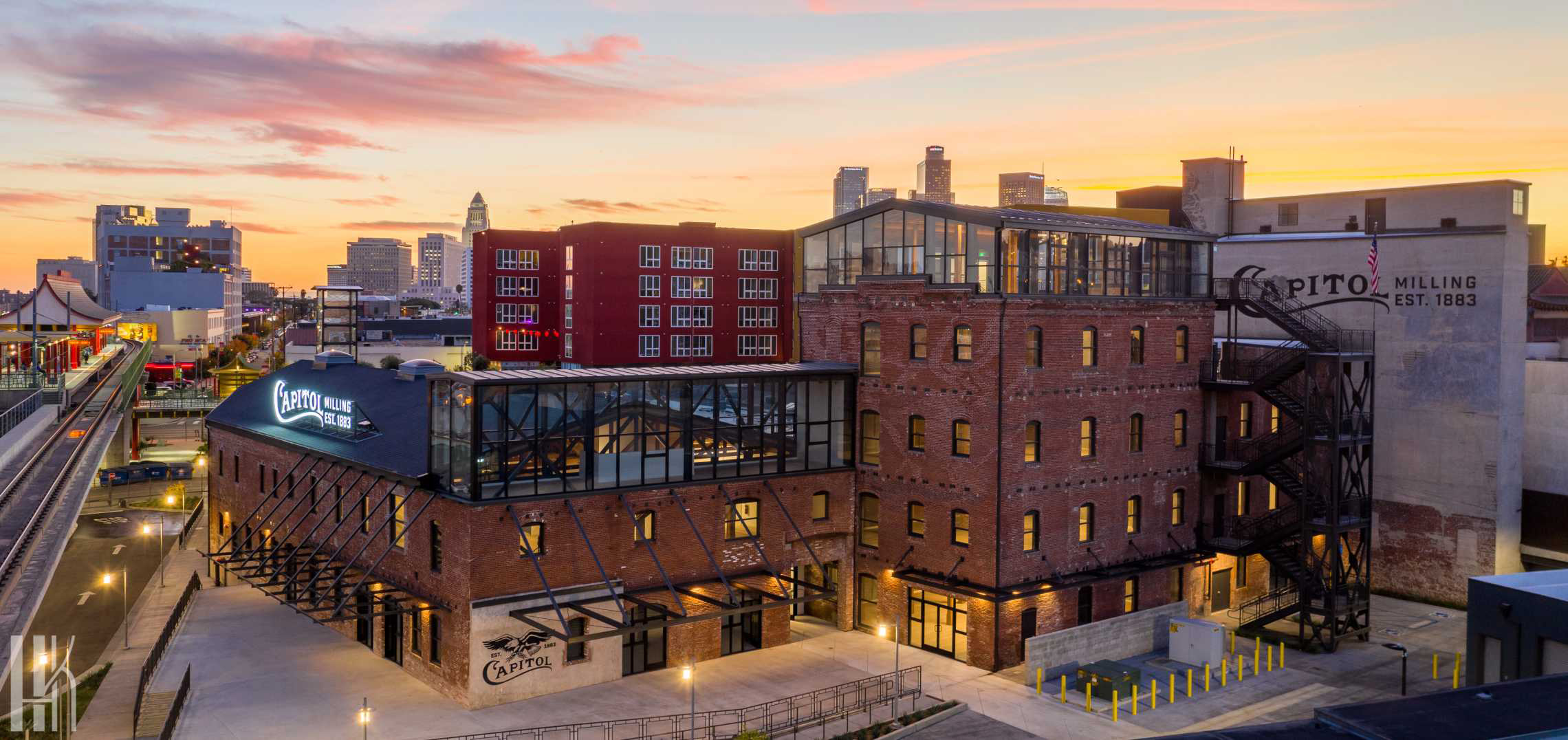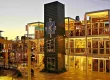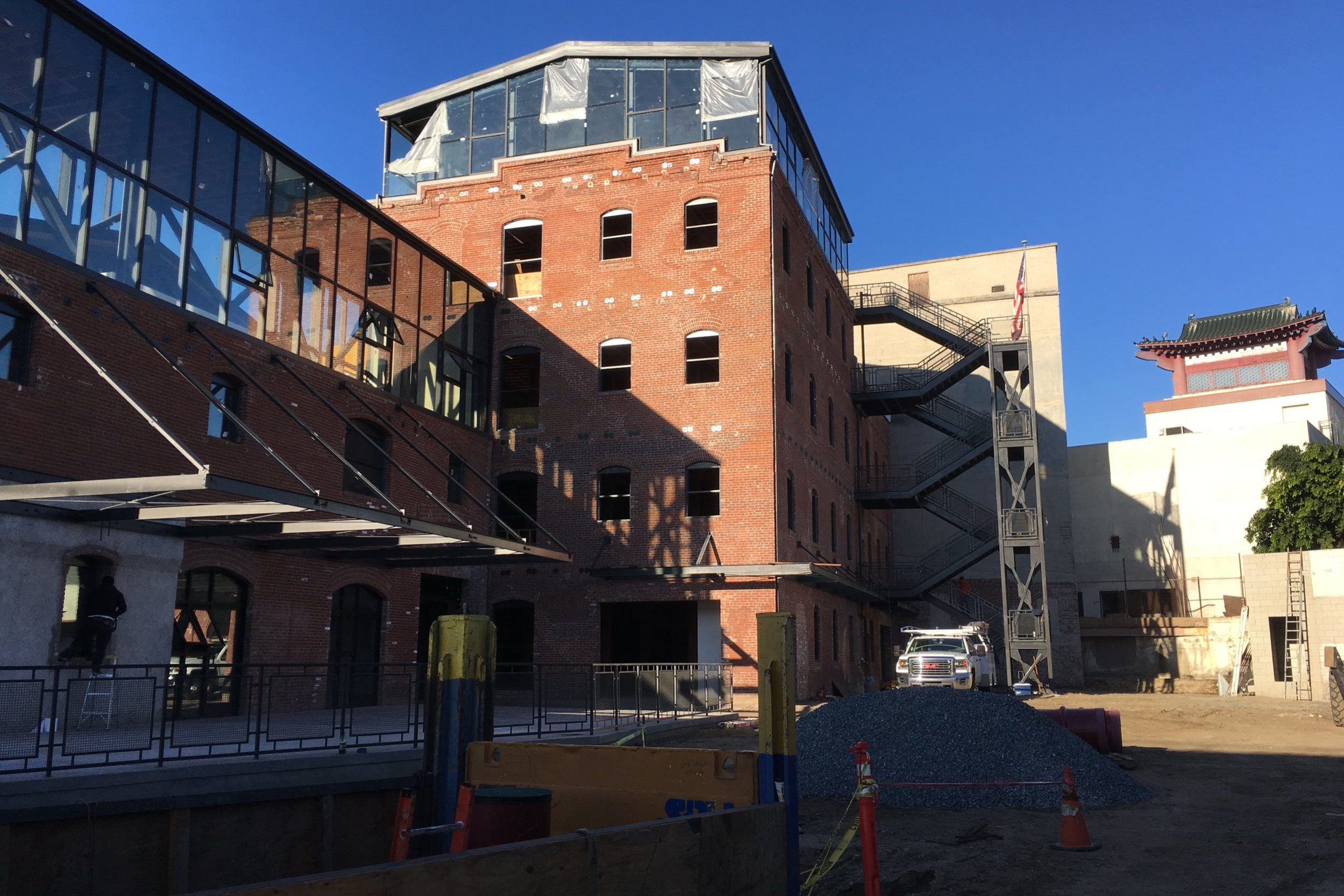
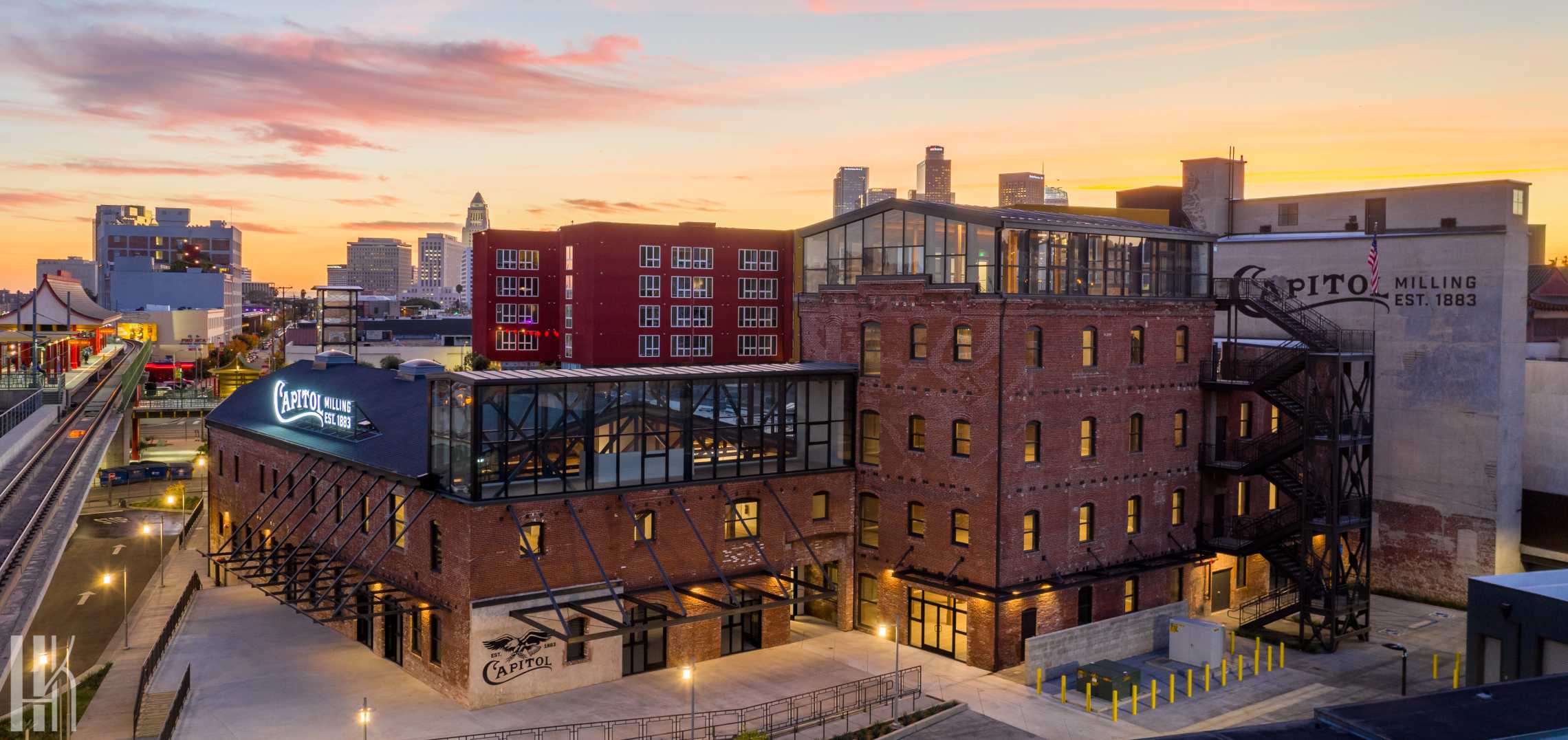
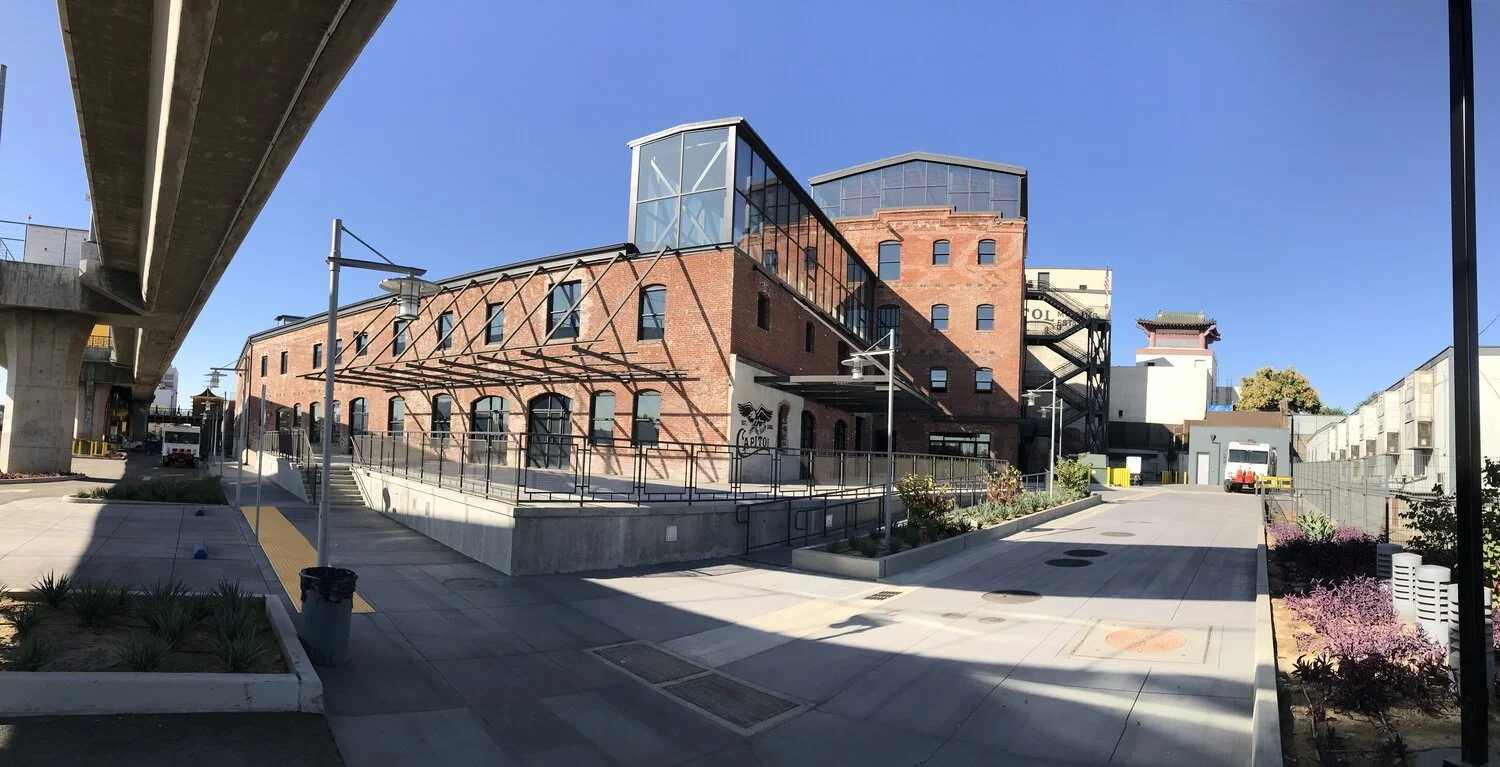
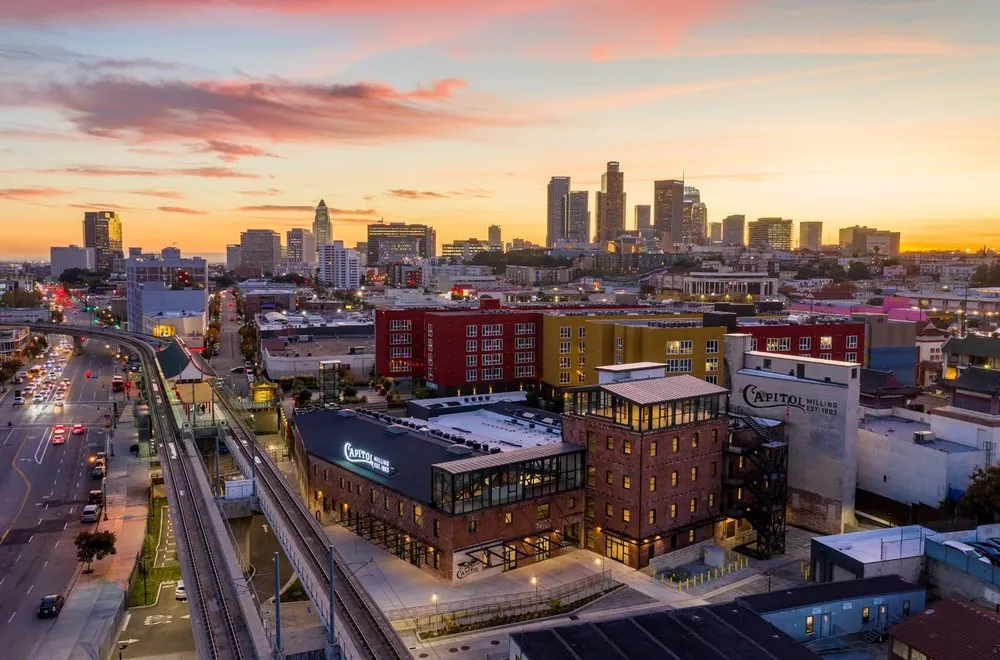
Due north of the Metro’s Chinatown Station on Spring Street, with one look you’ll see the historic Capitol Milling Building brought back from the past.
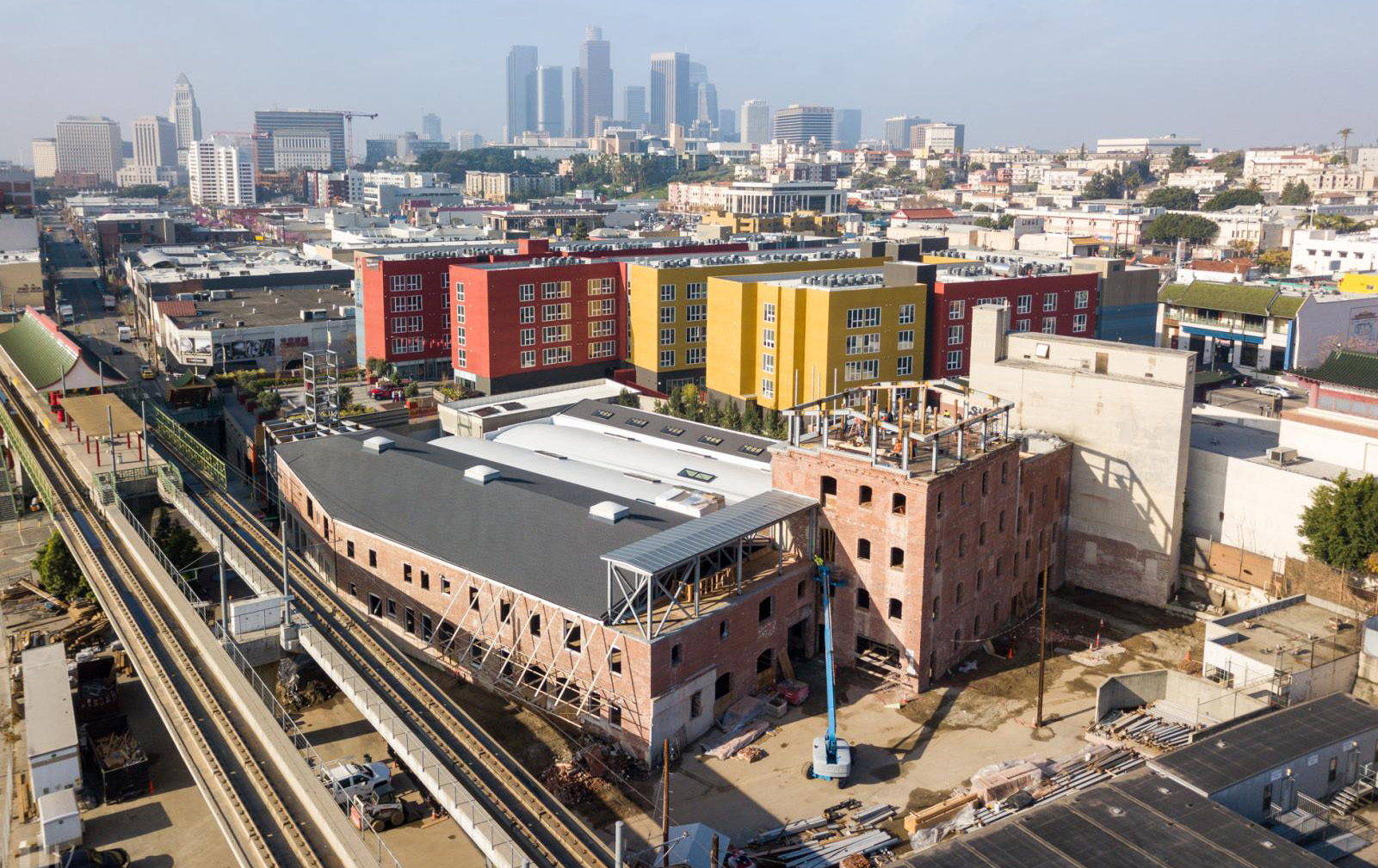
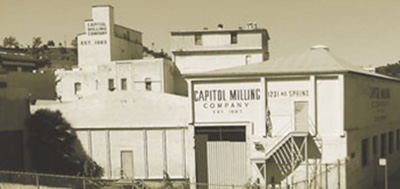
Built in the 1800s and renovated beginning in 2016, the Capitol Milling Building feels like a time machine. This blend of brick and wooden structures once served as a flour mill until 1998 and is one of the city’s oldest industrial sites.
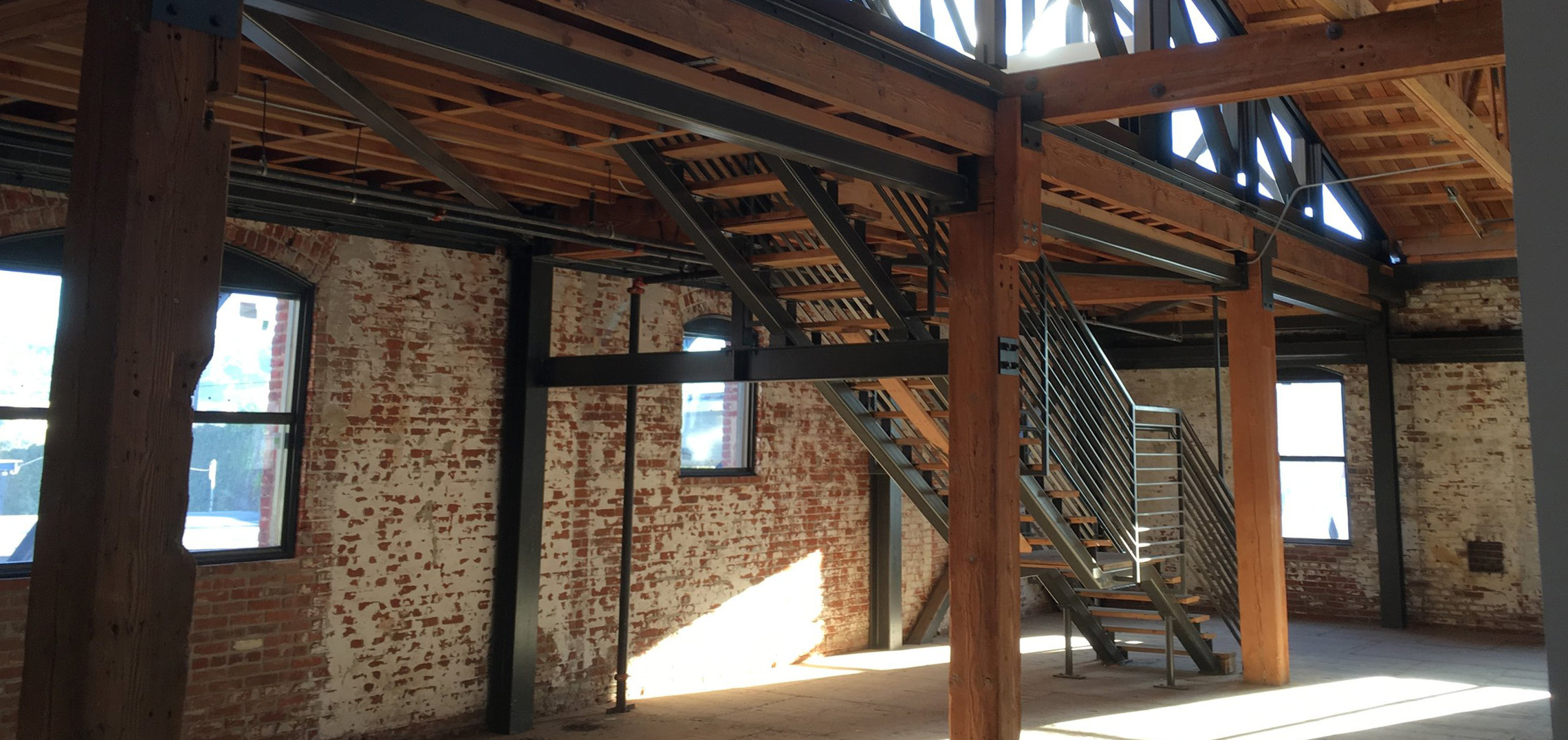
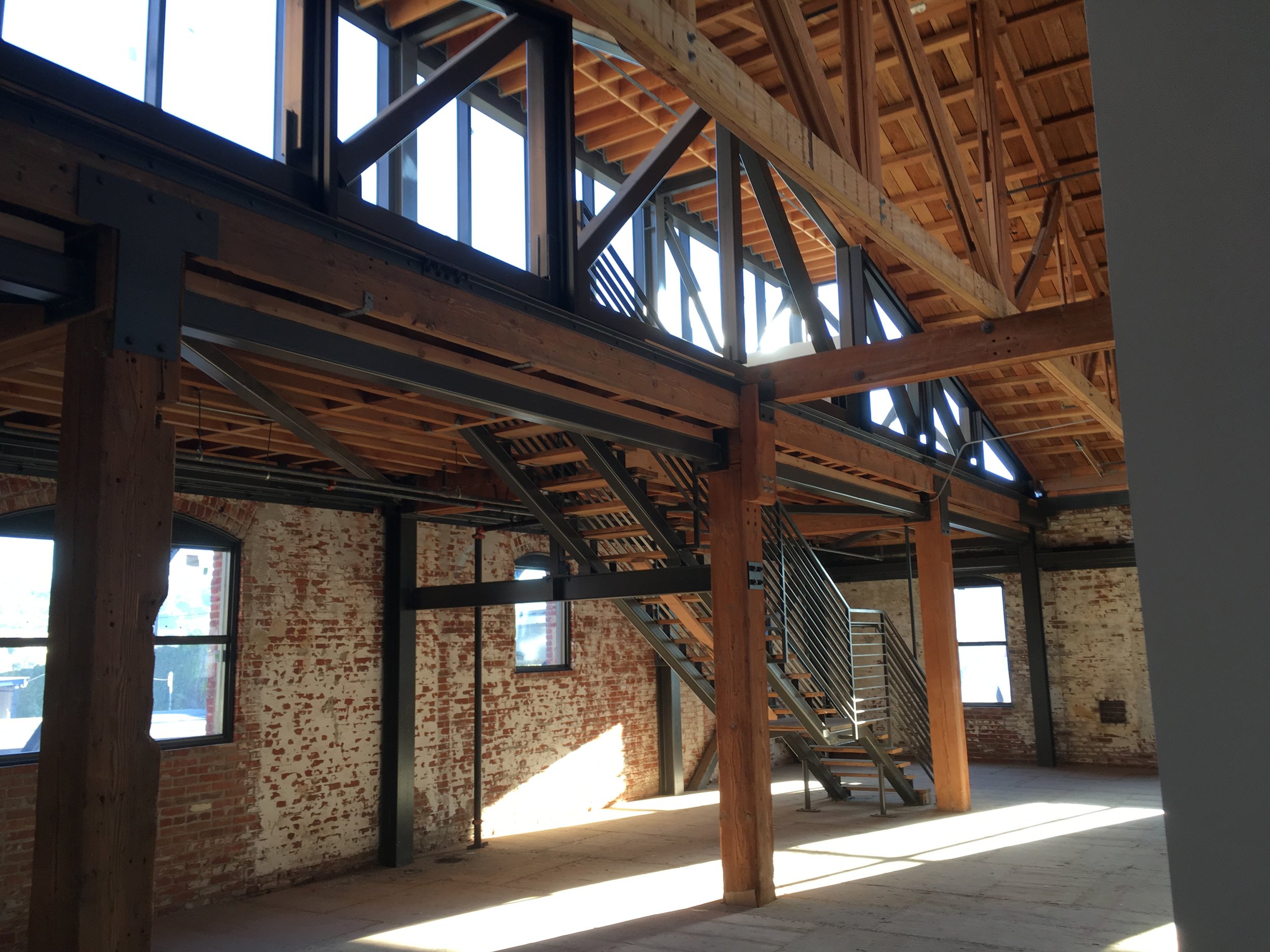
The extensive renovations undertaken beginning in 2016 involved numerous elements planned and designed by US Steel Stairs.
History of the Capitol Milling Building
Located at 1231 North Spring Street in downtown Los Angeles, the history of the Capitol Milling Building stretches back to the 1800s.
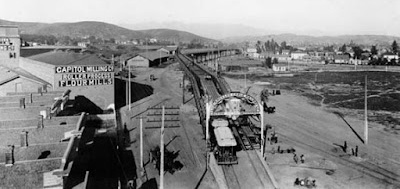
According to the Jewish Journal, flour milling operations began on the property in the 1830s and parts of some of the buildings that were included in the restoration project may date back to those early years of milling operations.
While the exact dates of construction for each of the structures on the property are matters of some debate, the buildings were mostly developed when the company was sold to Jacob Loew in 1880s.
“It was one of the leading enterprises of the city,” the Los Angeles Times reported on April 2, 1888. The mill employed around 40 people, working day and night to produce “flour, meal and feed.” The total output of the mill in the year prior to the article was “1,800 to 2,000 carloads of ten tons each, most of which was consumed in Los Angeles and vicinity.”
The Loew family would continue operating the flour mill until 1998 when the company was shuttered and the property sold.
Revitalizing the Capitol Milling Building
After milling operations ceased, the property would change hands a few times before Steve Riboli, the owner of San Antonio Winery, purchased the buildings.
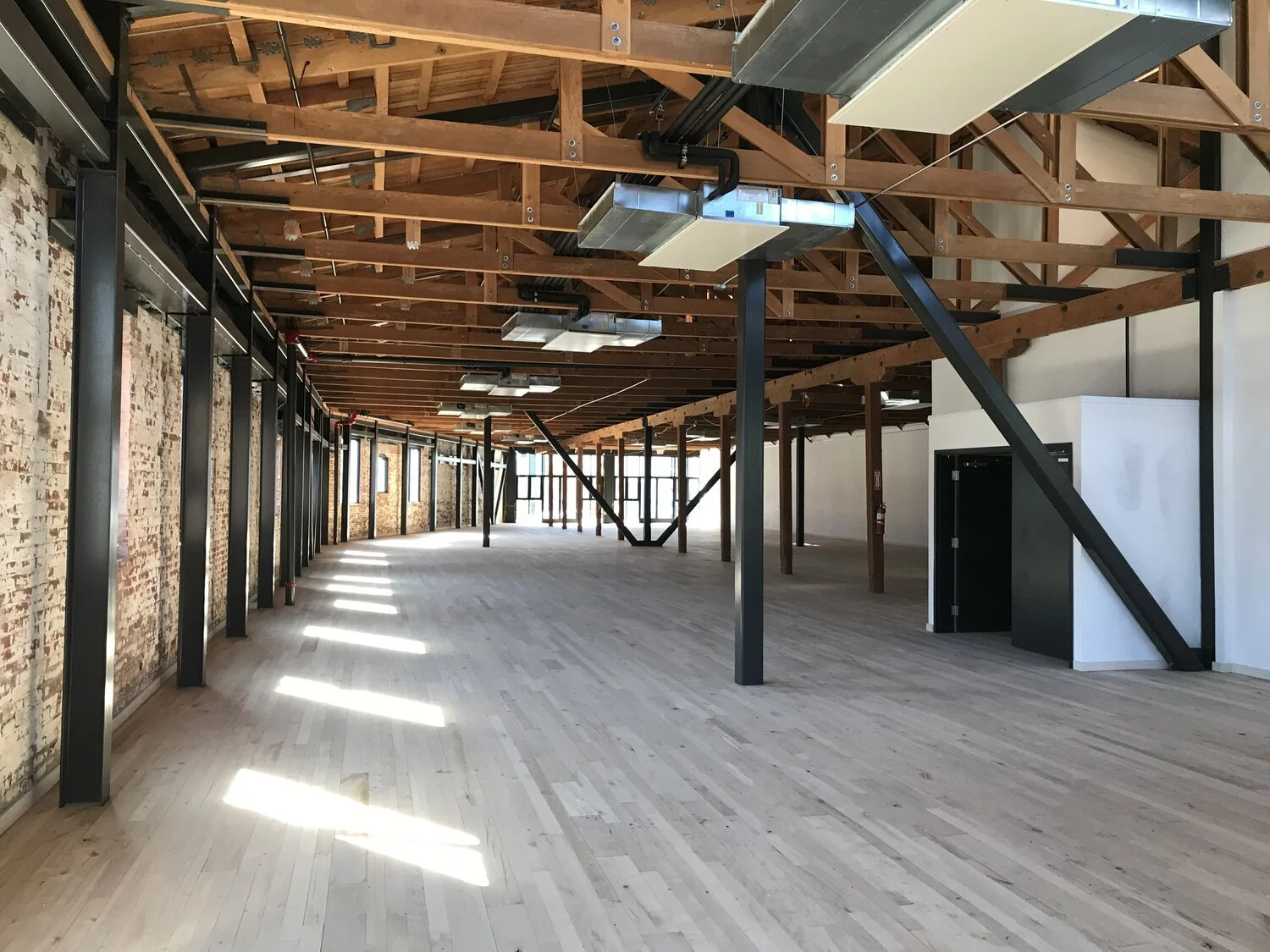
In 2016, Riboli began work on turning this historic mill into 50,000 square feet of restaurants, shops and offices.
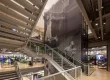
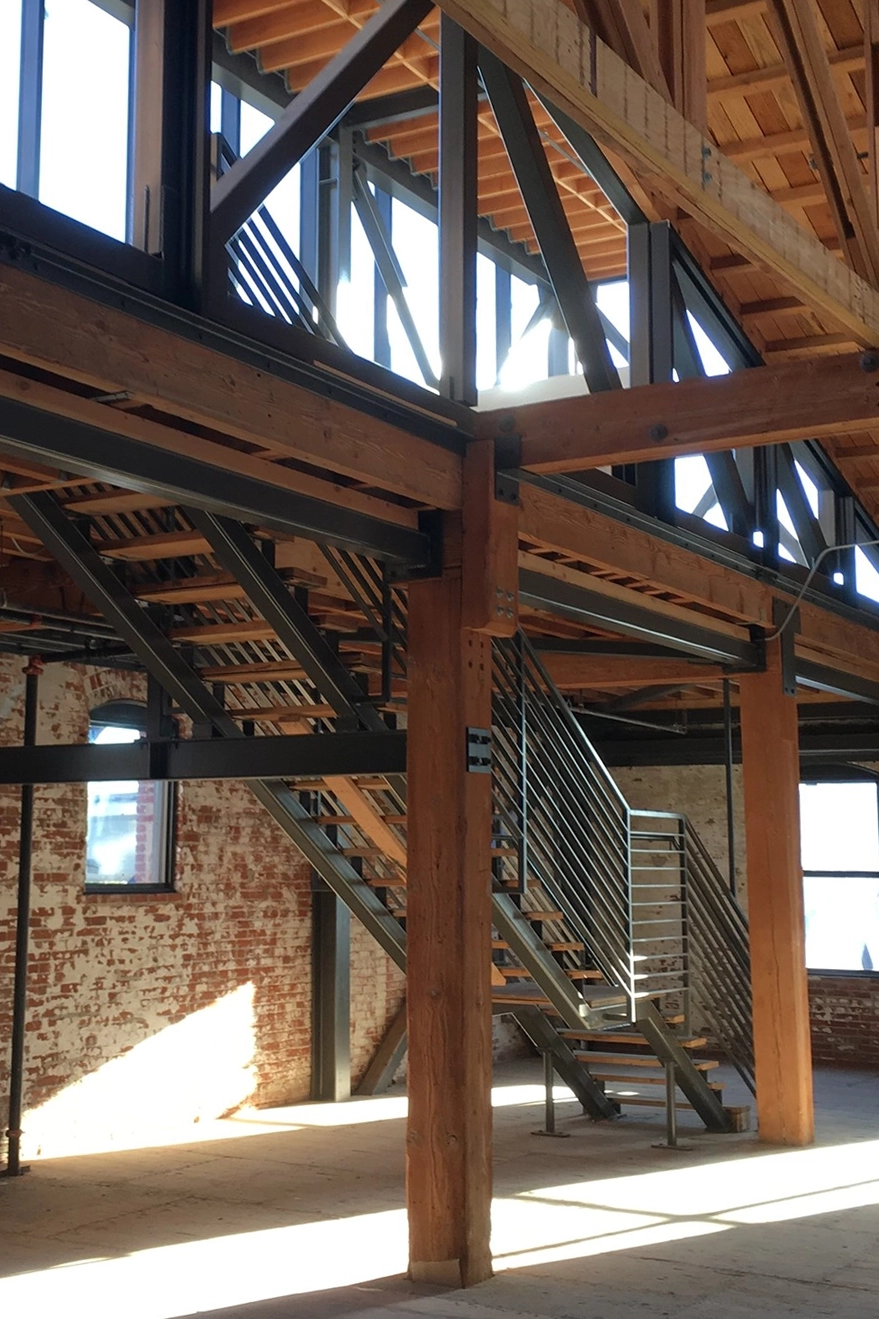
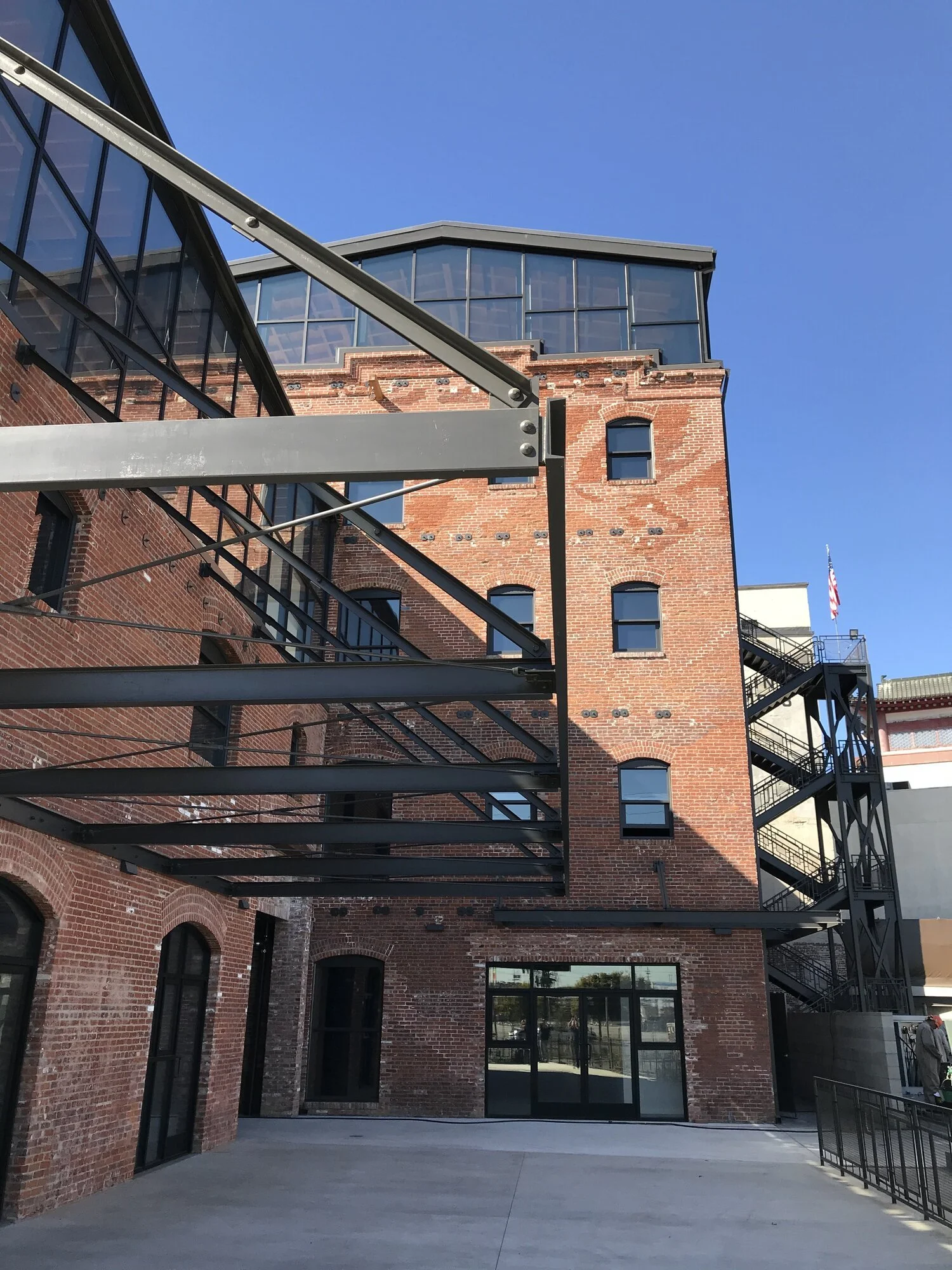
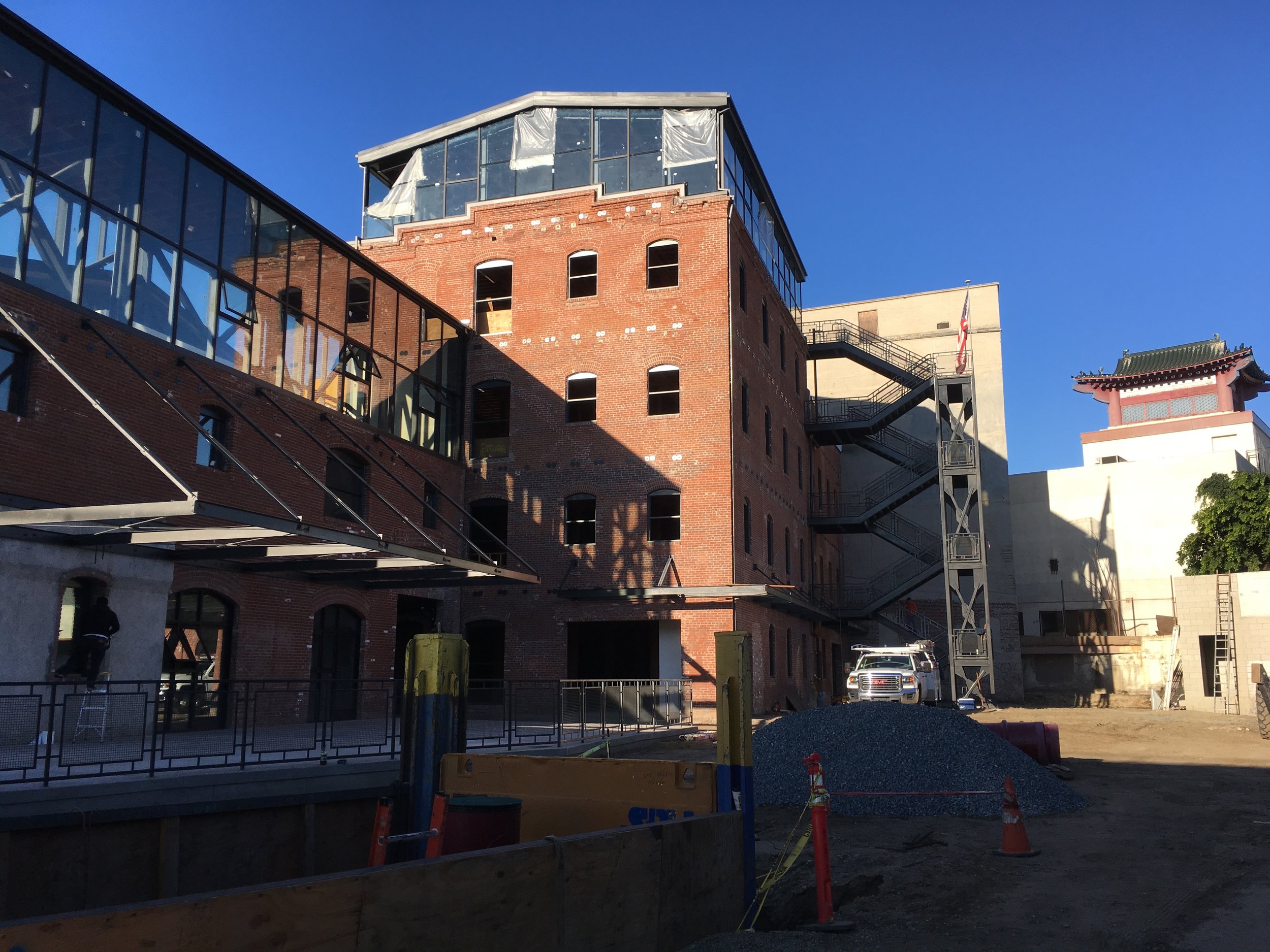
For our part at US Steel Stairs, working with Firestone Fabricators, we were tasked with designing rolled beams, towers, elevator shafts, staircases both inside and outside of the buildings, along with structural steel for the glass that features so prominently in the redesign of the buildings.
This was no small undertaking, but the project would ultimately create a spectacular new commercial space in the crowded downtown L.A. cityscape.
It has since become a favorite shooting location for hundreds of commercials and television shows and serves as a wonderful modern business space with a classic look and historic feel.